Spinal cord stimulation, or SCS, is an advanced therapy for chronic pain that has not responded adequately to less invasive options. The concept is straightforward: a small device delivers gentle electrical signals to the spinal cord, which alters the way pain signals reach the brain. The result, for patients who are good candidates, can be a 50 to 80 percent reduction in chronic pain that has not budged for years.
Because SCS involves an implanted device, the bar for candidate selection is appropriately high. The published consensus guidelines from interventional pain societies are clear: SCS works best when it is offered to carefully evaluated patients whose pain pattern, psychological readiness, and prior treatment history all line up. Choosing the right patient is half the success of the therapy.
Who SCS was designed for
The most common indication for SCS is persistent radiating leg or arm pain that continues after spine surgery — a pattern that has been called post-laminectomy syndrome or persistent spinal pain syndrome. Patients in this group often describe burning, shooting, or electric pain that follows a clear nerve distribution and that has not responded to medication, physical therapy, or repeat injections.
Other established indications include complex regional pain syndrome of an arm or leg, painful diabetic neuropathy that has not responded to medical management, and certain forms of intractable ischemic pain. Newer waveforms and waveform-selectable devices are also showing benefit for some patients with non-surgical low back pain, although this is an evolving area and candidate selection here is even more careful.
Who SCS is not for
Consensus guidelines highlight several situations where SCS is not the right answer. Active untreated psychosis, ongoing untreated substance use disorder, and uncontrolled major depression that has not been addressed all argue against proceeding to an implant. This is not about gatekeeping — it is about being honest that SCS works through the nervous system, and a nervous system that is in significant turmoil is unlikely to respond well to neuromodulation.
Untreated mechanical instability of the spine, active infection at the implant site, certain bleeding disorders, and the inability to operate the device or attend follow-up are also reasons to defer or decline. A thoughtful evaluation usually identifies anything that needs to be addressed first, and many patients become good candidates after another condition is treated.
The trial period — why it matters
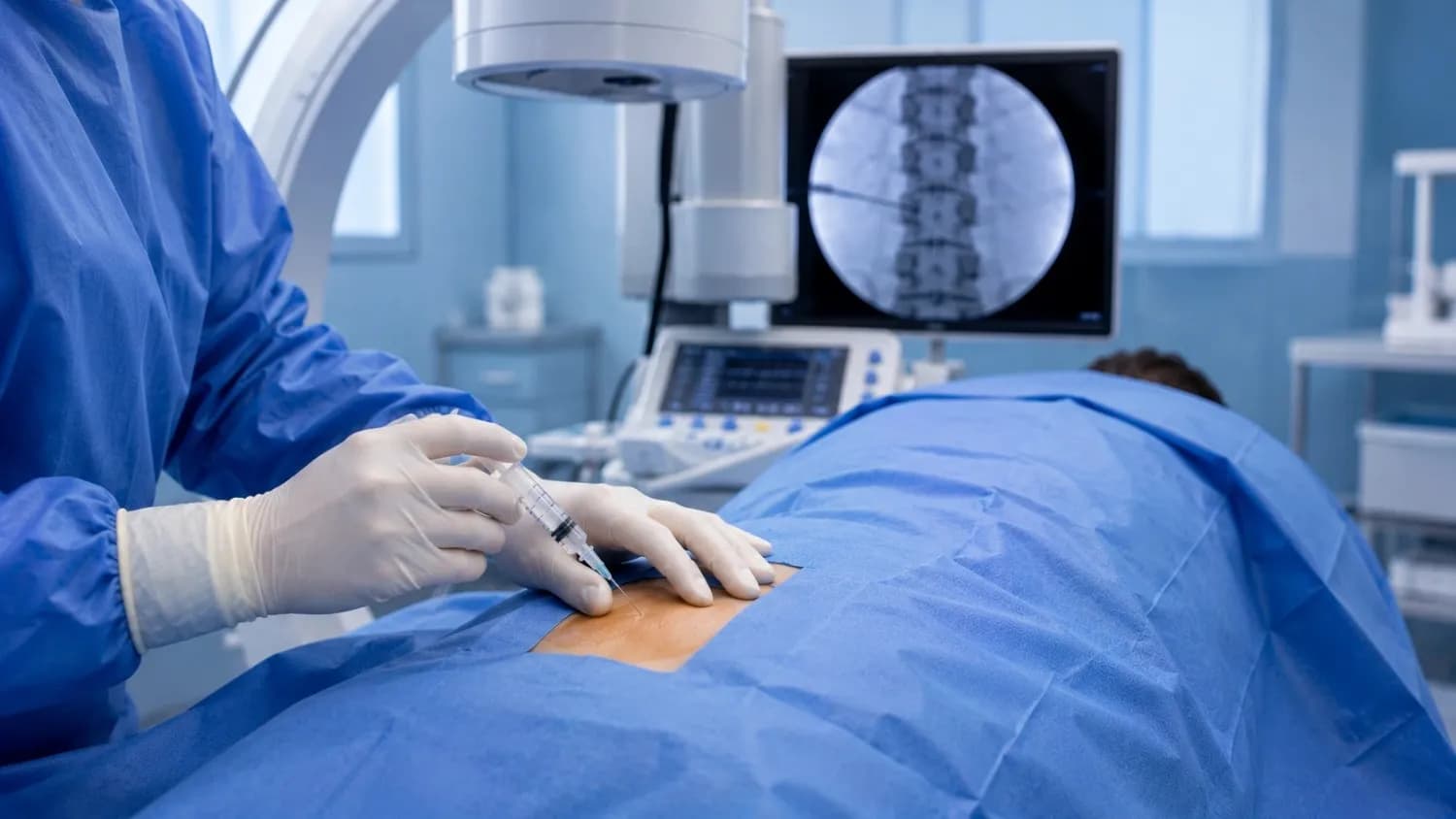
One of the most patient-friendly features of SCS is that you do not commit to a permanent implant until you have personally experienced what the device feels like. During a trial, your physician places thin temporary leads through a needle into the epidural space using local anesthesia and fluoroscopic guidance. The leads are connected to a small external generator that you wear for roughly five to seven days at home, going about your normal daily life.
During the trial we ask you to track three things: how much your pain decreases, how your function changes (sleep, walking, activity), and how much medication you actually need. The bar for moving forward to a permanent implant is a clear, sustained 50 percent or greater reduction in pain, accompanied by functional improvement. If the trial does not meet that bar, the leads are removed in clinic and you have lost very little — no implant, no surgical commitment.
“We would rather a trial fail and protect you from an unnecessary implant than push a permanent device on a patient who isn't getting real benefit.”
If the trial works — the permanent implant
When a trial is clearly successful, the permanent implant is scheduled as an outpatient procedure. The trial leads are removed, and small permanent leads are positioned through a similar technique. A pulse generator about the size of a small pocket watch is placed under the skin, usually in the upper buttock or flank, and connected to the leads. Most patients go home a few hours later.
Recovery focuses on protecting the implant site for the first few weeks while incisions heal. Heavy lifting, twisting, and reaching overhead are temporarily restricted. By six to eight weeks, most patients are back to full activity with the device delivering steady relief in the background, and most are able to reduce or discontinue chronic pain medications.
Living with a stimulator
Modern SCS devices are programmable, rechargeable, and discreet. You will not feel the device sitting under your skin in normal daily life. A small handheld controller or phone app lets you turn the device on and off, adjust intensity, and switch between programs. Most patients use a tonic or burst waveform that they cannot consciously feel, while paresthesia-based programs that produce a gentle tingling sensation remain an option for patients who prefer them.
Routine follow-ups with your pain specialist focus on fine-tuning programs and confirming that the device is delivering its intended benefit. MRI compatibility varies by device, so it is important to let other providers know you have a stimulator and to check compatibility before any imaging.
How to know if SCS belongs in your conversation
Spinal cord stimulation is not a first-line treatment, and it is not the answer for every chronic pain patient. It is an excellent answer for a specific subset: people with clearly defined chronic nerve pain that has not responded to the standard ladder of treatments and who are otherwise ready, both medically and psychologically, for a device-based therapy. If that sounds like your situation, the right next step is a careful evaluation rather than a decision in either direction.
Interventional Pain Management evaluates patients for spinal cord stimulation across Pasadena, Baytown, and Katy. A first visit reviews your history, examines what has and has not worked, and gives you an honest assessment of whether SCS belongs in your plan. Call 713.369.1969 or request an appointment online to start that evaluation.