Carpal Tunnel Syndrome
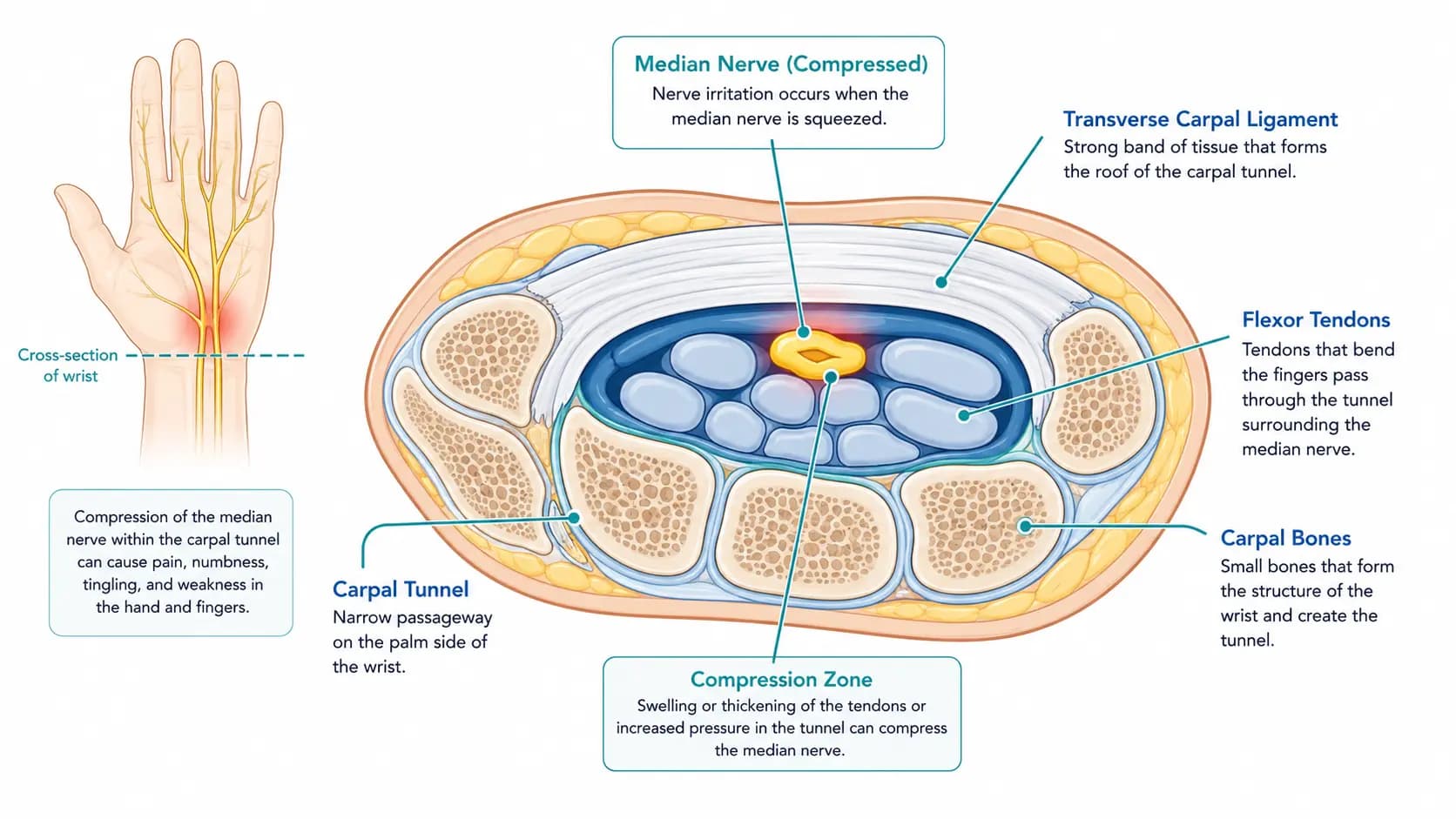
Carpal tunnel syndrome is compression of the median nerve at the wrist, producing numbness, tingling, and weakness in the hand that often worsens at night.
Our evaluation confirms the diagnosis and rules out cervical or systemic contributors before recommending the right tier of treatment.
Diagnosis-first care for carpal tunnel syndrome
Physician-led evaluation, image-guided procedures when indicated, and insurance-friendly scheduling across three Houston-area clinics.
Understanding carpal tunnel syndrome
Carpal tunnel syndrome occurs when the median nerve is compressed as it passes through the carpal tunnel — a narrow channel at the base of the palm. The classic pattern is numbness or tingling in the thumb, index, middle, and half of the ring finger, often worse at night or with sustained gripping.
Repetitive hand use, pregnancy, thyroid disease, diabetes, and inflammatory conditions can all contribute. Because similar symptoms can come from cervical nerve root irritation, our evaluation includes the neck and shoulder as well as the wrist.
Mild and moderate cases often respond well to non-surgical care including bracing, activity modification, and targeted injection. Our role is to confirm the diagnosis, identify modifiable contributors, and offer the least invasive effective treatment.
Carpal tunnel rarely becomes an emergency, but certain features should prompt earlier evaluation to prevent progression.
- Constant rather than intermittent numbness
- Visible thinning of the thumb-side palm muscles
- Hand weakness that interferes with daily tasks
- Symptoms unchanged after several weeks of bracing
What patients usually describe
- Numbness or tingling in the thumb, index, and middle fingers
- Symptoms that wake you from sleep
- Weakness or clumsiness with fine motor tasks
- Hand pain that radiates into the forearm
- Dropping objects or difficulty with buttons
- Burning or electric sensations in the palm
- Symptoms triggered by driving, phone use, or computer work
What we look for in evaluation
- Repetitive wrist flexion or gripping
- Pregnancy-related fluid shifts
- Diabetes, thyroid disease, or inflammatory arthritis
- Wrist trauma or prior fracture
- Workstation ergonomics and tool vibration
- Anatomic narrowing of the carpal tunnel
Diagnosis comes before any procedure.
Evaluation includes provocative tests at the wrist, a neurologic exam of the upper limb, and a screen of the cervical spine. Nerve conduction studies and electromyography may be ordered to confirm the diagnosis and grade severity. We also screen for systemic contributors that affect treatment choice.
Provocative wrist tests, neurologic exam, cervical screen.
Nerve studies when needed to confirm and grade severity.
Bracing, activity modification, and targeted injection when indicated.
Treatments we offer for carpal tunnel syndrome
Each option below is matched to a confirmed pain generator. We start with the least invasive effective approach and only escalate when the diagnosis supports it.
Your first appointment
Plan for a focused first visit centered on history, exam, and discussion of any prior nerve studies. Most patients leave with a working diagnosis, a bracing plan, and a clear path to next-step options.
What recovery typically looks like
Many mild and moderate cases improve substantially with conservative care over several weeks to months. Severe or progressive cases may need surgical referral, which we coordinate when appropriate.
Conditions patients with carpal tunnel syndrome often ask about
Questions about carpal tunnel syndrome
Could my hand symptoms be coming from my neck?
Yes. Cervical nerve root irritation can mimic carpal tunnel. Distinguishing the two is part of our exam and may include nerve conduction testing.
Will a wrist brace alone fix it?
Bracing is a useful first step for many patients, especially when symptoms are worse at night. It is most effective combined with activity modification and treatment of any contributing condition.
When is surgery needed?
Surgery is considered when symptoms are severe, persistent despite non-surgical care, or there is clear muscle weakness or atrophy. We coordinate referrals when surgery is the right choice.
Ready to find the source of your pain?
Share a few details and our team will reach out to confirm a time that works with your schedule and your insurance.
Request an appointment
Tell us about your carpal tunnel syndrome symptoms and preferred clinic. We will confirm the next available appointment options.