Degenerative Arthritis
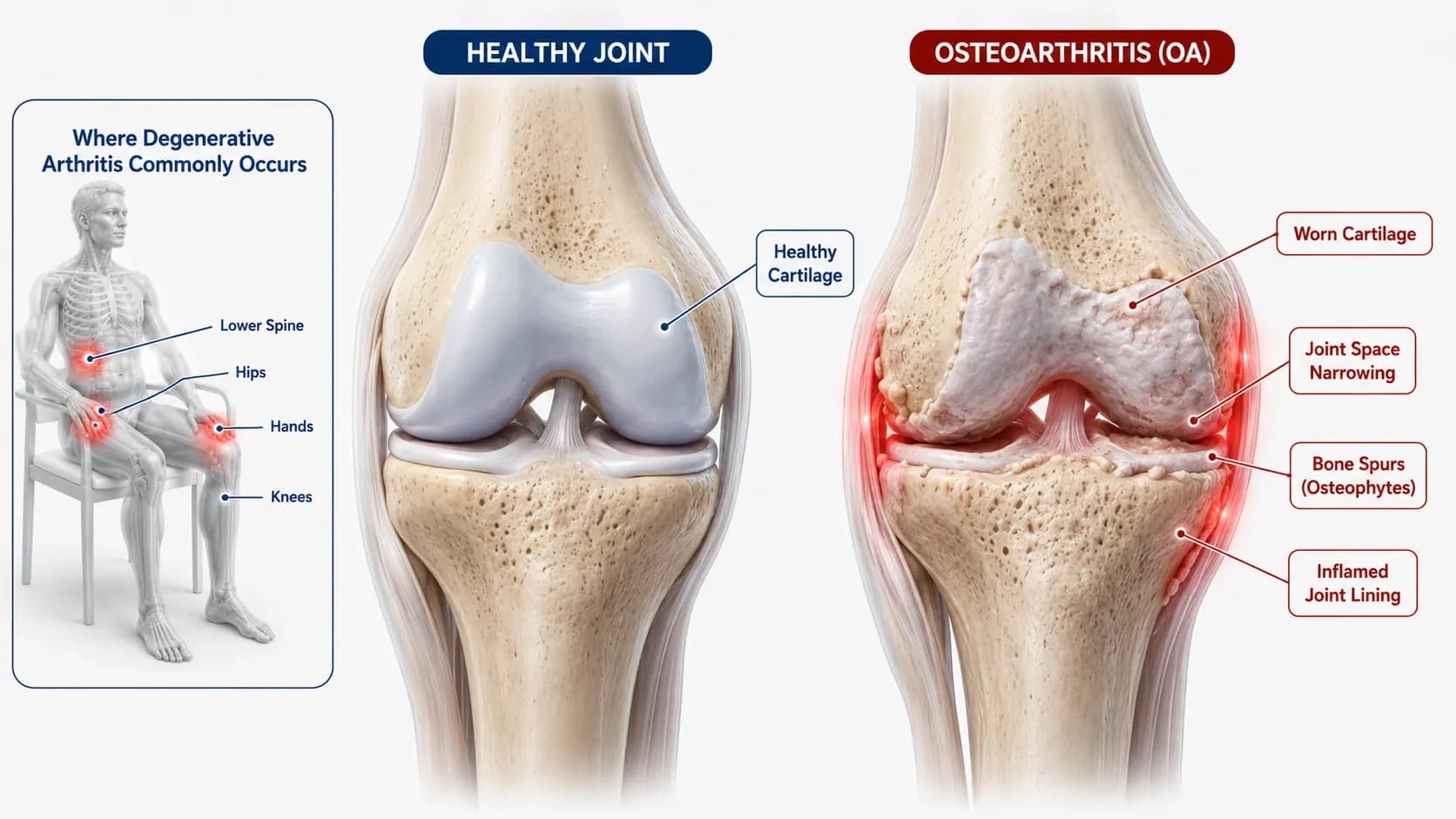
Degenerative arthritis, or osteoarthritis, is thinning of joint cartilage that causes pain, stiffness, and reduced motion in the knees, hips, shoulders, hands, and facet joints of the spine.
Many people have cartilage wear visible on imaging without pain. Our evaluation confirms whether the joint itself is driving your symptoms so treatment targets the right source.
Diagnosis-first care for degenerative arthritis
Physician-led evaluation, image-guided procedures when indicated, and insurance-friendly scheduling across three Houston-area clinics.
Understanding degenerative arthritis
Degenerative arthritis reflects progressive thinning of the cartilage that normally protects joints. Over time, loss of this smooth, shock-absorbing layer allows bone-on-bone contact, triggering pain, inflammation, and stiffness. In the spine, arthritis affecting the facet joints — which connect the vertebrae — is a common source of mechanical back and neck pain.
Imaging often shows cartilage wear that causes no pain at all. This is important: many people have significant degenerative changes on X-rays or MRI yet feel nothing. The imaging finding alone does not diagnose the problem. A careful exam confirms whether the joint is truly the source of pain.
Degenerative arthritis is different from rheumatoid arthritis, which is an autoimmune inflammatory disease that affects multiple joints symmetrically and requires specific medication management. Osteoarthritis is mechanical wear, managed through targeted injections, activity modification, and sometimes procedural interventions.
Most joint arthritis is manageable with conservative care, but certain findings warrant evaluation.
- Pain that interferes with daily function or sleep
- Increasing joint instability or feeling of buckling
- Rapid onset of swelling or warmth in the joint
- Persistent pain despite home management
What patients usually describe
- Joint pain that worsens with activity or load
- Morning stiffness that improves with movement
- Reduced motion or clicking in the joint
- Swelling or warmth in the affected joint
- Pain worse at the end of the day
- Mechanical symptoms like catching or locking
- Aching that improves with rest
What we look for in evaluation
- Age-related cartilage wear
- Prior joint injury or trauma
- Repetitive mechanical load over time
- Joint misalignment or instability
- Genetic predisposition to cartilage loss
- Postural stress or occupational overload
Diagnosis comes before any procedure.
The exam tests the joint for range of motion, pain with movement, effusion, and signs of instability. Imaging is interpreted in the context of your exam findings, because cartilage wear is common without pain. For facet joint arthritis in the spine, medial branch blocks may be used to confirm the joint as the source before committing to longer-term treatment.
Range of motion, joint loading tests, exam correlation with imaging.
Diagnostic blocks to confirm the joint when multiple sites appear involved.
Tiered strategy with injections, activity modification, and procedural options for sustained relief.
Treatments we offer for degenerative arthritis
Each option below is matched to a confirmed pain generator. We start with the least invasive effective approach and only escalate when the diagnosis supports it.
Your first appointment
Expect a thorough exam that correlates your symptoms with physical findings and imaging. Most patients leave with a clear explanation of what the imaging shows, whether the joint is truly the source, and a plan that may include injections, activity strategies, and when to consider procedural options.
What recovery typically looks like
Degenerative arthritis is managed over time rather than cured. Interventional care can reduce pain and inflammation, support continued activity, and delay or prevent surgery. Many patients maintain good function with injections spaced over months, activity modification, and conditioning.
Conditions patients with degenerative arthritis often ask about
Questions about degenerative arthritis
If I have degenerative changes on my X-ray, does that mean my pain comes from arthritis?
Not necessarily. Many people have significant cartilage wear visible on imaging without any pain. A careful exam determines whether the joint is actually responsible for your symptoms.
Can degenerative arthritis be reversed?
No, cartilage does not regrow once lost. Treatment aims to reduce pain, preserve function, and support activity while slowing further wear.
What is the difference between degenerative arthritis and rheumatoid arthritis?
Degenerative arthritis is mechanical wear of cartilage that typically affects one or a few joints. Rheumatoid arthritis is an autoimmune condition that affects multiple joints symmetrically and requires systemic anti-inflammatory or immunosuppressive medication.
Ready to find the source of your pain?
Share a few details and our team will reach out to confirm a time that works with your schedule and your insurance.
Request an appointment
Tell us about your degenerative arthritis symptoms and preferred clinic. We will confirm the next available appointment options.