Low Back Pain
Low back pain is one of the most common reasons adults seek medical care, yet most patients never receive a clear diagnosis of where the pain is actually coming from.
At IPM, our evaluation focuses on identifying the specific pain generator in the lumbar spine so the treatment plan targets the source rather than the symptom alone.
Diagnosis-first care for low back pain
Physician-led evaluation, image-guided procedures when indicated, and insurance-friendly scheduling across three Houston-area clinics.
Understanding low back pain
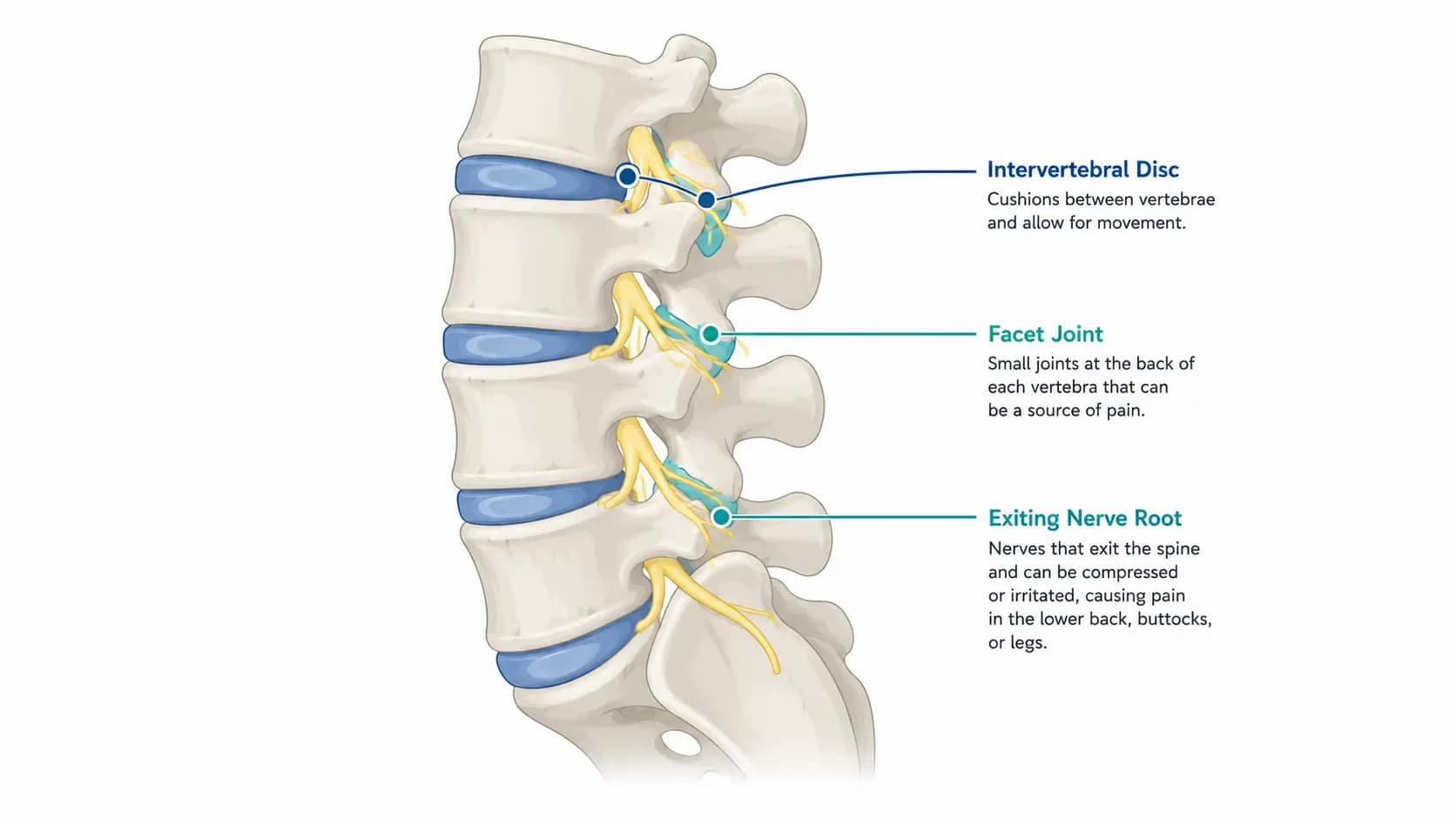
Low back pain refers to discomfort, stiffness, or sharp pain felt anywhere between the lower rib cage and the gluteal folds. It can originate from the intervertebral discs, facet joints, sacroiliac joints, surrounding ligaments, paraspinal muscles, or the spinal nerves themselves. Because so many structures sit in close proximity, the same activity can produce different patterns of pain across patients, which is why a careful diagnostic workup matters.
Most acute episodes improve within several weeks with conservative care. When pain persists beyond twelve weeks, recurs frequently, or interferes with sleep, work, or daily function, it is considered chronic and benefits from a structured interventional evaluation. Chronic low back pain is rarely about a single muscle pull and more often reflects a combination of disc, joint, and nerve-related contributions.
Our approach is diagnosis-first. We aim to localize the pain generator before recommending any procedure so that treatment is matched to anatomy and behavior, not to a generic protocol.
Most short-lived episodes can be self-managed, but certain warning signs should prompt prompt evaluation rather than watchful waiting.
- Pain following a fall, motor-vehicle collision, or significant trauma
- New weakness, numbness, or foot drop in either leg
- Loss of bowel or bladder control or saddle-area numbness
- Unexplained weight loss, fever, or night pain that is not relieved by rest
What patients usually describe
- Aching, stiffness, or sharp pain in the lower back
- Pain that worsens with prolonged sitting, standing, or bending
- Radiating pain into the buttock, hip, or thigh
- Morning stiffness that loosens with movement
- Muscle spasm or guarding after lifting or twisting
- Difficulty transitioning from sitting to standing
- Pain that disrupts sleep or limits walking distance
What we look for in evaluation
- Lumbar disc degeneration, bulging, or herniation
- Facet joint arthritis and joint capsule inflammation
- Sacroiliac joint dysfunction
- Spinal stenosis or foraminal narrowing
- Soft-tissue strain, deconditioning, or postural overload
- Persistent pain after prior spine surgery
Diagnosis comes before any procedure.
Diagnosis begins with a focused history, neurologic exam, and provocative testing to identify which structure reproduces the pain. We review prior imaging when available and order MRI, X-ray, or EMG only when results would change the plan. In selected cases, diagnostic injections such as medial branch blocks or sacroiliac joint blocks are used to confirm the pain generator before recommending longer-term treatment.
Focused history, neurologic and movement-based exam, review of prior imaging.
Targeted imaging or diagnostic blocks when needed to confirm the pain source.
Tiered, non-surgical plan beginning with the least invasive effective option.
Treatments we offer for low back pain
Each option below is matched to a confirmed pain generator. We start with the least invasive effective approach and only escalate when the diagnosis supports it.
Your first appointment
Your first visit is a conversation as much as an exam. Plan for sixty to seventy-five minutes that includes intake, medical history, a hands-on physical exam, review of imaging, and a discussion of working diagnoses. You will leave with a written care plan, an outline of next-step options, and clarity on what your insurance covers.
What recovery typically looks like
Recovery depends on the underlying cause. Many patients experience meaningful improvement within a few weeks of starting a targeted plan, with continued gains over two to three months. Follow-up visits are scheduled to confirm response, taper interventions, and reinforce activity, posture, and conditioning so improvement is durable.
Conditions patients with low back pain often ask about
Questions about low back pain
How long should I wait before seeing a pain specialist for low back pain?
If pain has lasted longer than four to six weeks, is recurring, or is limiting work, sleep, or daily function, an interventional evaluation is reasonable. Red-flag symptoms warrant immediate evaluation.
Will I need an MRI before my first visit?
Not always. A careful exam often guides the plan without new imaging. We order MRI when results are likely to change next-step decisions.
Is interventional care a substitute for physical therapy?
No. Injections and procedures are most effective when combined with conditioning, posture work, and progressive activity. We coordinate the two.
Are these procedures covered by Medicare?
Most diagnostic and therapeutic spine injections are covered by Medicare and major commercial plans when medically indicated. Our team verifies coverage before scheduling.
Ready to find the source of your pain?
Share a few details and our team will reach out to confirm a time that works with your schedule and your insurance.
Request an appointment
Tell us about your low back pain symptoms and preferred clinic. We will confirm the next available appointment options.