Rheumatoid Arthritis
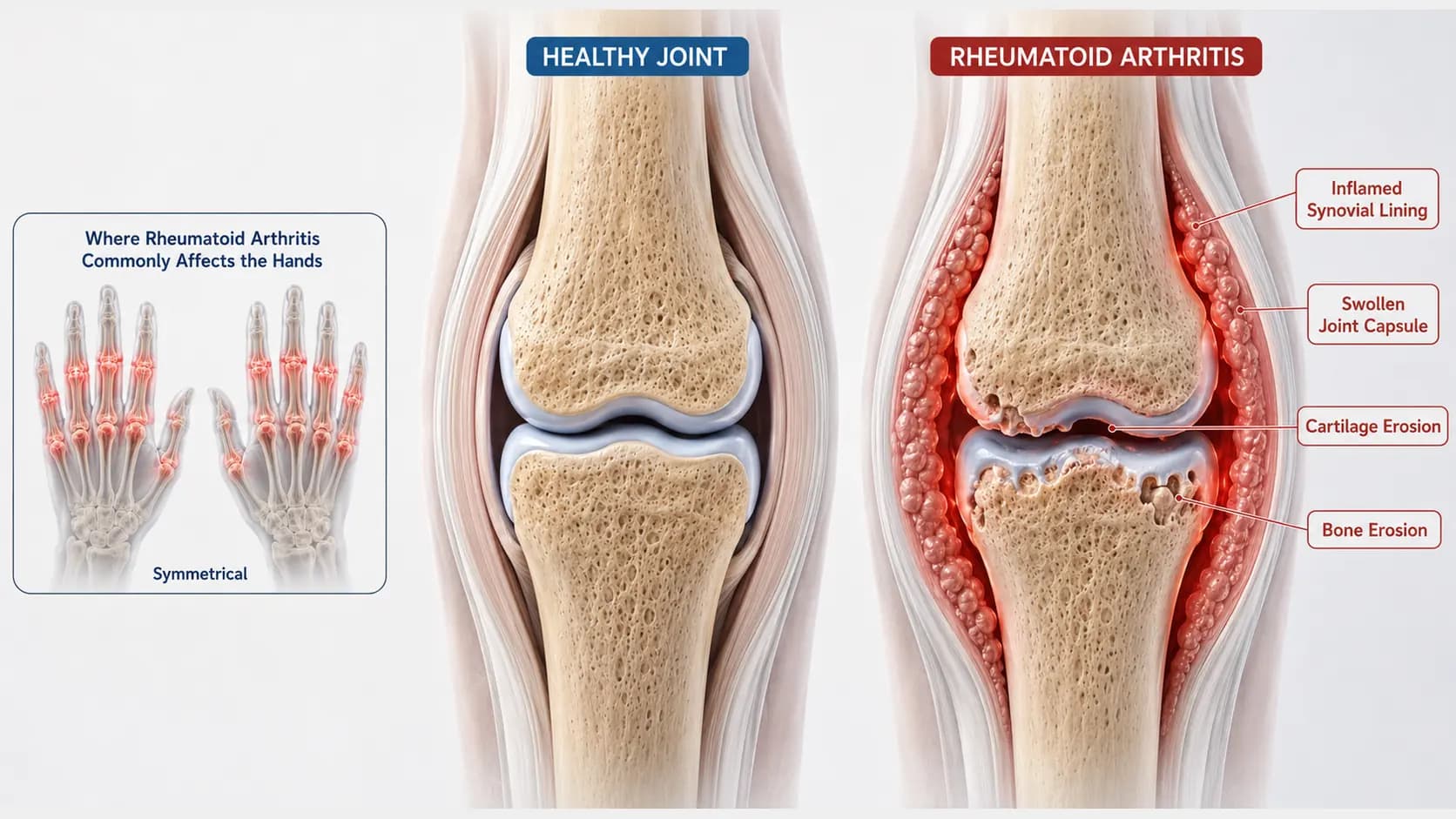
Rheumatoid arthritis is a chronic autoimmune disease in which the immune system attacks the joint lining, causing symmetrical inflammation, swelling, and pain — most often in the hands, wrists, and feet.
We manage the pain while you work with your rheumatologist on disease-modifying therapy. Interventional care and your rheumatology team work together.
Diagnosis-first care for rheumatoid arthritis
Physician-led evaluation, image-guided procedures when indicated, and insurance-friendly scheduling across three Houston-area clinics.
Understanding rheumatoid arthritis
Rheumatoid arthritis is a systemic autoimmune disease in which the immune system mistakenly attacks the synovial lining of joints. The result is chronic inflammation, swelling, warmth, and pain — typically in a symmetrical pattern, affecting the same joints on both sides of the body. This differs fundamentally from osteoarthritis, which is wear-related and asymmetrical.
Disease-modifying antirheumatic drugs (DMARDs) and biologic agents are the cornerstone of RA treatment and are managed by rheumatology. These drugs target the underlying autoimmune process and are essential to slowing disease progression. This practice does not replace or modify rheumatology care.
We focus on managing the pain and inflammation when joints remain symptomatic despite rheumatology treatment, or when the pain window is slowing recovery. Our work complements your rheumatologist's systemic management and supports your function and quality of life.
Most RA patients are under rheumatology care. However, specific pain patterns or new findings warrant urgent attention.
- Sudden swelling of new joints or worsening swelling despite DMARD therapy
- Fever accompanying joint pain or swelling
- Inability to move a joint or sudden loss of function
- Signs of systemic illness — persistent fatigue, weight loss, or signs of infection
What patients usually describe
- Swelling, warmth, and tenderness in multiple joints
- Symmetrical pain — both hands, both feet, both wrists
- Prolonged morning stiffness, often lasting an hour or more
- Fatigue and general malaise
- Potential involvement of larger joints — knees, shoulders, hips
- Reduced grip strength and hand dexterity
- Low-grade fever or systemic symptoms in some patients
What we look for in evaluation
- Autoimmune activation — the immune system targets the synovial lining of joints
- Genetic predisposition — certain gene variants increase risk
- Environmental triggers — infection or smoking may precipitate disease in genetically susceptible individuals
- Female predominance — women are affected more frequently than men
- Etiology not fully understood despite decades of research
Diagnosis comes before any procedure.
We evaluate the specific joints causing pain, the degree of swelling and warmth, and whether pain is limiting your ability to function. We coordinate with your rheumatologist to understand your current disease state and medication regimen. Imaging helps identify which joints are driving your symptoms.
Physical exam and imaging to identify which joints are most painful and inflamed.
Review your rheumatology care, current medications, and disease state.
Targeted pain management that supports your overall RA care plan.
Treatments we offer for rheumatoid arthritis
Each option below is matched to a confirmed pain generator. We start with the least invasive effective approach and only escalate when the diagnosis supports it.
Your first appointment
Expect a thorough exam focused on identifying which joints are driving your pain and how they affect your function. We will discuss your rheumatology plan and how our interventions fit alongside your current medications.
What recovery typically looks like
Improvement in pain depends on how well your underlying disease is controlled by rheumatology. Interventional care can provide relief and improve function, especially when inflammation in specific joints is limiting you despite systemic therapy.
Conditions patients with rheumatoid arthritis often ask about
Questions about rheumatoid arthritis
Can interventional pain care cure my rheumatoid arthritis?
No. Rheumatoid arthritis is not curable, and it is managed with disease-modifying medications prescribed by rheumatology. We focus on managing pain and improving function when specific joints remain problematic.
Will these injections interfere with my rheumatology medications?
We coordinate with your rheumatologist before any procedure. Corticosteroid injections do not interact with DMARDs or biologics, but communication between your doctors is essential.
Do I need to stop my medications before an injection?
Usually not. However, discuss this with both your rheumatologist and our team. Some medications affect bleeding; we will provide specific preoperative instructions.
Ready to find the source of your pain?
Share a few details and our team will reach out to confirm a time that works with your schedule and your insurance.
Request an appointment
Tell us about your rheumatoid arthritis symptoms and preferred clinic. We will confirm the next available appointment options.