Opioid Addiction and Substance Use
Opioid addiction is a medical condition, not a moral failing. It often begins with legitimate pain management but develops into dependence that affects your health, relationships, and quality of life. Treatment is available, and we welcome patients at any stage.
Dr. Memon is board certified in addiction medicine and coordinates care with your other providers to address both pain and dependence.
Diagnosis-first care for opioid addiction and substance use
Physician-led evaluation, image-guided procedures when indicated, and insurance-friendly scheduling across three Houston-area clinics.
Understanding opioid addiction and substance use
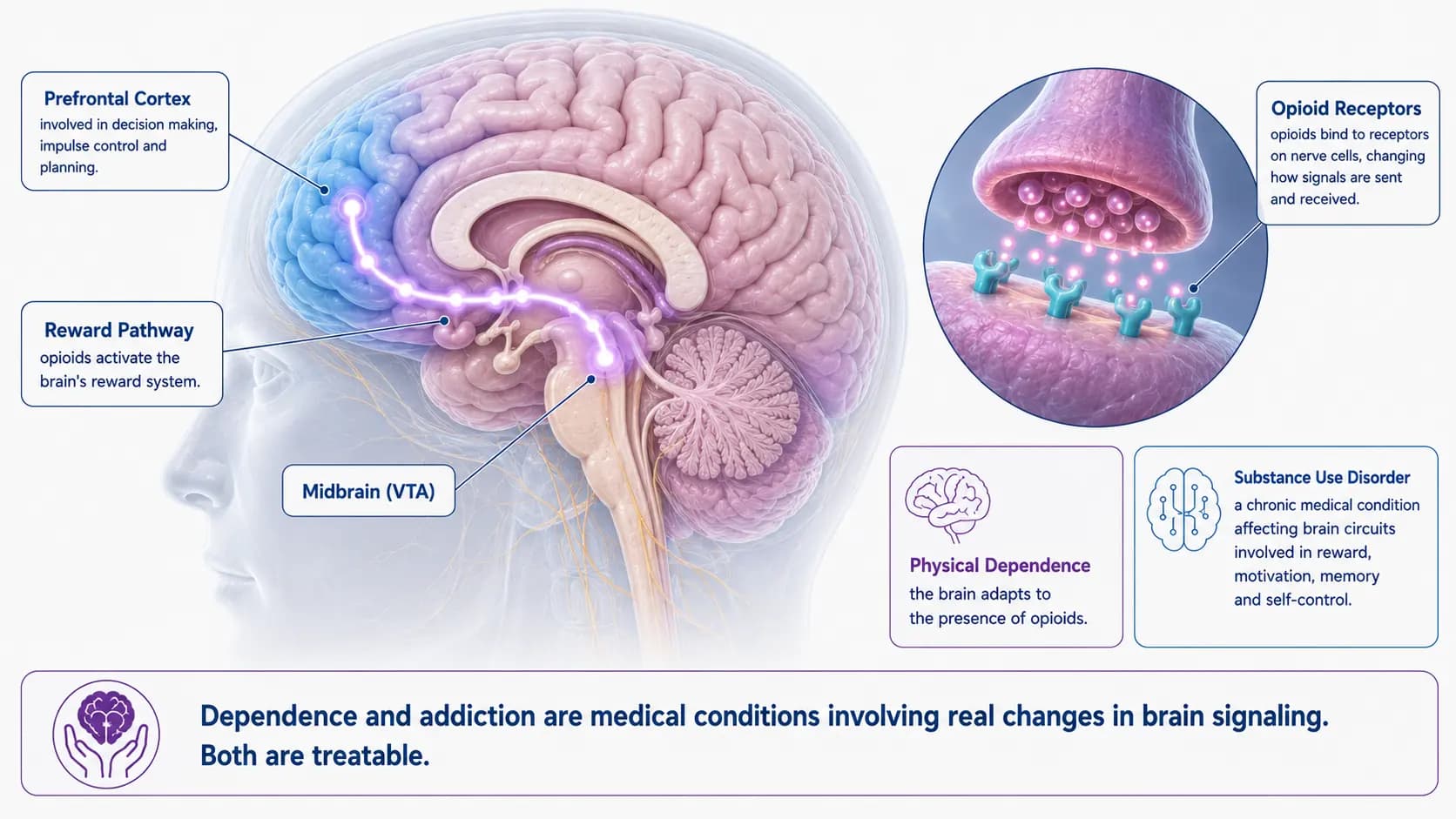
Opioid use disorder is a chronic condition characterized by loss of control over opioid use, continued use despite harm, and often a powerful drive to obtain and use opioids. It can develop after legitimately prescribed pain medication or emerge alongside untreated pain. The two often coexist and reinforce each other, making coordinated care essential.
Many people with opioid dependence also live with pain conditions — back pain, arthritis, previous injury, or post-surgical discomfort. This overlap means that effective treatment addresses both the pain and the dependence, rather than treating one while ignoring the other. Patients are often afraid to seek help for either concern; this practice welcomes both.
Recovery is possible through evaluation, structured care, and often a combination of medical support, pain management, and coordination with specialists. The journey is different for each person, but the medical framework is the same: consistent evaluation, transparent communication, and a plan that makes sense for your life.
Most people with opioid dependence can be treated in an office setting, but certain situations require immediate emergency care.
- Any signs of overdose — shallow breathing, unresponsiveness, or loss of consciousness — call 911 immediately
- Thoughts of suicide or harming yourself
- Severe confusion, high fever, or chest pain
- Severe withdrawal symptoms or inability to function
What patients usually describe
- Using opioids in larger amounts or for longer periods than intended
- Failed attempts to reduce or stop opioid use
- Spending significant time obtaining, using, or recovering from opioid use
- Craving opioids or a strong desire to use
- Continued use despite recurring physical, psychological, or social problems
- Neglecting family, work, or other important activities
- Withdrawal symptoms — anxiety, body aches, sweating, insomnia — when unable to use
What we look for in evaluation
- Legitimate pain medication prescribed for injury, surgery, or chronic pain conditions
- Ongoing pain that was never adequately addressed
- Genetic and biological factors that increase susceptibility to dependence
- Mental health conditions — depression, anxiety, trauma — that opioids temporarily relieve
- Environmental and social factors, including access and peer influence
- Loss of a relationship, job, or major life change
Diagnosis comes before any procedure.
The evaluation begins with listening. We review your history of pain, medication use, attempts to reduce use, and how addiction has affected your life. We assess for co-occurring conditions like depression or anxiety. We also evaluate any pain conditions you live with, because treating pain is part of treating dependence. Coordination with your primary care doctor and any other specialists you see is built into the plan.
Review your history, current symptoms, and any pain conditions alongside the dependence.
Connect with your other providers and establish clear communication about your care.
Build a treatment plan that addresses both addiction and pain, with realistic expectations.
Treatments we offer for opioid addiction and substance use
Each option below is matched to a confirmed pain generator. We start with the least invasive effective approach and only escalate when the diagnosis supports it.
Your first appointment
Expect a thorough, non-judgmental conversation. We listen to your story without shame and ask detailed questions about pain, use patterns, and what has worked or not worked before. You will leave with a clear diagnosis, a written plan, and a sense that you are not being dismissed or judged.
What recovery typically looks like
Recovery from opioid dependence is ongoing medical care, not a single event. Some patients improve quickly; others work through setbacks and adjustments. Addressing underlying pain is part of the recovery plan because untreated pain is a major trigger for relapse. Regular follow-up, honest communication, and coordination with your other doctors are the foundation.
Conditions patients with opioid addiction and substance use often ask about
Questions about opioid addiction and substance use
Will you turn me away because of my addiction?
No. Patients with a history of dependence are welcomed here. We treat addiction as a medical condition. If you have pain, you also deserve care for that. Our role is to provide consistent, non-judgmental medical evaluation and support.
How is opioid addiction treated?
Treatment is tailored to your situation and may include medical support through office-based care, addressing any underlying pain conditions, managing co-occurring mental health concerns, and coordination with your other doctors. Recovery is a process, not a quick fix.
What if I have both pain and opioid dependence?
This is common, and both deserve attention. We evaluate and treat the pain condition alongside dependence management, because untreated pain makes recovery harder. Our interventional options can reduce pain and support lower medication needs.
Ready to find the source of your pain?
Share a few details and our team will reach out to confirm a time that works with your schedule and your insurance.
Request an appointment
Tell us about your opioid addiction and substance use symptoms and preferred clinic. We will confirm the next available appointment options.