Epidural Steroid Injections
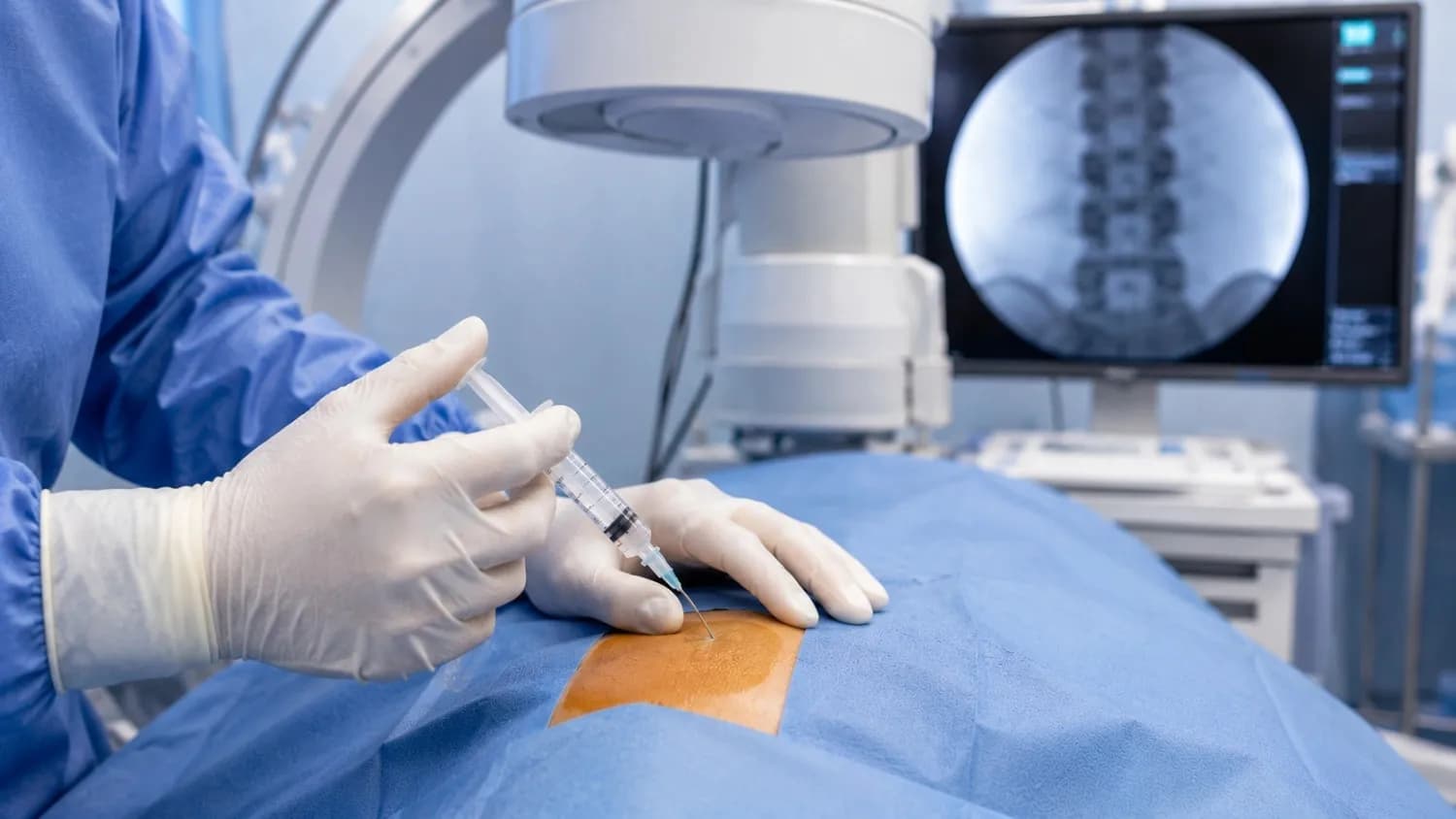
An epidural steroid injection places anti-inflammatory medication into the epidural space around inflamed spinal nerves causing back, neck, or radiating limb pain.
It is one of the most studied non-surgical options for sciatica, radiculopathy, and herniated disc–related nerve pain — designed to calm the irritated nerve enough for rehabilitation to take hold.
What this treatment is and why it is used.
Epidural steroid injections (ESIs) target inflammation around the nerve roots as they exit the spine. When a disc, bone spur, or narrowed canal irritates a nerve, the result can be sharp back pain, radiating leg or arm pain, numbness, or tingling. Reducing inflammation around that nerve often reduces the symptoms it produces.
ESIs are commonly used for lumbar radiculopathy (sciatica), cervical radiculopathy, herniated disc–related pain, and certain forms of spinal stenosis. The injection does not change the underlying anatomy — it lowers nerve irritation so movement, therapy, and recovery can resume.
At our clinic, every ESI is performed under fluoroscopic guidance to confirm needle placement before any medication is delivered. The procedure is structured around safety, accuracy, and patient comfort.
- Sciatica and Pinched Nerve
- Herniated or Bulging Disc
- Spinal Stenosis
- Low Back Pain
- Neck Pain
- Degenerative Disc Disease
Our team starts with a clinical evaluation to confirm the pain generator before any procedure.
The procedure, step by step.
Every step is designed for accuracy and comfort. You will know what to expect before, during, and after.
Your physician identifies the inflamed nerve level using your symptoms, exam, and imaging.
You lie face down on a fluoroscopy table. The skin over the target spinal level is cleaned and draped sterilely.
A small amount of numbing medication is used to anesthetize the skin and deeper tissue along the needle path.
Live X-ray guidance is used to advance the needle into the epidural space. Contrast dye confirms correct placement.
A small volume of corticosteroid, often with anesthetic, is delivered into the epidural space around the irritated nerve.
You are monitored briefly, given aftercare instructions, and discharged shortly afterward with a follow-up plan.
Before, during, and after the appointment.
You will receive instructions on medications to pause, fasting if sedation is planned, and arrival timing. Bring a driver if sedation will be used. Tell us about blood thinners or recent infections.
You lie face down. After numbing the skin, the physician uses live X-ray to position the needle. Most patients feel pressure rather than sharp pain. The injection itself takes only a few minutes.
You rest briefly in recovery. Some patients feel immediate relief from the anesthetic; full steroid effect develops over several days. Mild soreness is common.
What recovery typically looks like.
Most patients return to light activity the next day. We recommend avoiding heavy lifting and strenuous exercise for 24–48 hours, then resuming your physical therapy or home program. Pairing the injection with a structured rehabilitation plan typically produces the most durable results.
Candidacy is determined after a clinical evaluation.
Epidural steroid injections have been performed for decades and are generally well tolerated, but they are not appropriate for every patient. Candidacy is determined after a clinical evaluation that includes your diagnosis, imaging, prior treatments, current medications, and overall health. We will explain what the procedure can and cannot accomplish before scheduling.
Medicare and major insurance accepted.
Epidural steroid injections are widely covered by Medicare and major commercial insurance plans when medically indicated. Our staff verifies your benefits in advance, secures any required prior authorization, and reviews expected out-of-pocket costs with you before the procedure.
See accepted insurance plansCommon pain patterns we pair with epidural steroid injections.
Procedures that often work alongside this one.
Questions patients ask about this procedure.
How long does the relief last?
Duration varies by patient. Some experience relief lasting weeks to months. The most durable outcomes typically combine the injection with physical therapy and activity modification.
How many ESIs can I have?
Repeat injections are spaced according to clinical guidelines and your individual response. The goal is to use the fewest injections that support meaningful rehabilitation.
Is the procedure painful?
After the skin is numbed, most patients describe pressure rather than pain. The procedure itself is brief.
Will I need a driver?
Yes if sedation is planned. If only local anesthetic is used, most patients drive themselves home. We confirm this with you ahead of time.
Talk to a board-certified pain specialist.
We see new patients by referral across our Pasadena, Baytown, and Katy clinics. Our team will verify your insurance and walk you through the next step.
- Board-certified, fellowship-trained physician
- Medicare and major insurance accepted
- Three Greater Houston locations
- Bilingual staff and direct phone access
Request a epidural steroid injections consultation
Fluoroscopy-guided steroid placed around inflamed spinal nerves to calm sciatica, radiculopathy, and disc-related pain.