Spinal Stenosis
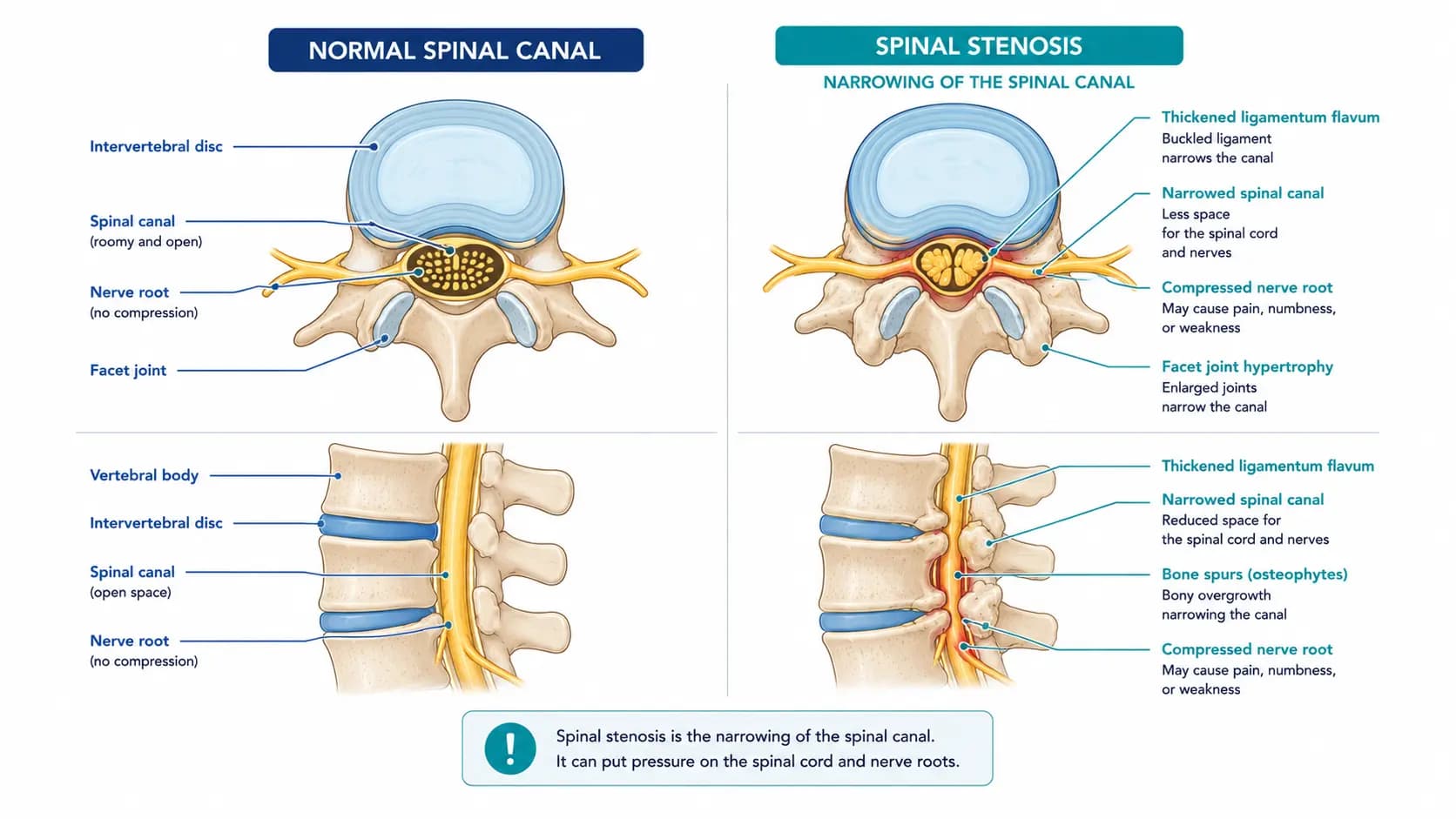
Spinal stenosis is a narrowing of the spinal canal that can compress the cord or nerve roots, producing pain, heaviness, or numbness that worsens with standing and walking.
Our evaluation distinguishes lumbar from cervical stenosis and identifies which level is symptomatic so the plan is targeted.
Diagnosis-first care for spinal stenosis
Physician-led evaluation, image-guided procedures when indicated, and insurance-friendly scheduling across three Houston-area clinics.
Understanding spinal stenosis
Spinal stenosis describes narrowing of the central canal, lateral recess, or neural foramen. It is most often a result of age-related changes — disc bulging, facet hypertrophy, ligament thickening — that gradually reduce the space available for the cord or nerve roots.
In the lumbar spine, the classic pattern is neurogenic claudication: heaviness, burning, or fatigue in the legs that worsens with standing and walking and improves with sitting or leaning forward. In the cervical spine, stenosis can produce arm pain, hand clumsiness, or balance changes.
Treatment is matched to severity and pattern. Many patients do well with non-surgical care for years; others benefit from a structured combination of interventional and conditioning approaches to maintain walking tolerance and quality of life.
Most stenosis progresses slowly, but some symptoms warrant earlier evaluation.
- Progressive weakness in a leg or hand
- Loss of balance or new gait change
- Loss of bowel or bladder control
- Rapidly worsening pain or numbness
What patients usually describe
- Leg heaviness, burning, or fatigue with walking
- Relief with sitting or leaning forward (shopping-cart sign)
- Numbness or tingling in both legs
- Reduced walking distance over time
- Cervical stenosis: hand clumsiness or balance change
- Back or neck pain with extension
- Night cramps or restless legs in some patients
What we look for in evaluation
- Age-related disc and facet changes
- Ligamentum flavum thickening
- Spondylolisthesis
- Congenitally narrow canal
- Prior trauma or surgery
- Post-inflammatory changes
Diagnosis comes before any procedure.
The exam includes neurologic testing, gait assessment, and provocative positioning. MRI is the imaging study of choice when results would change the plan. Diagnostic injections may help confirm the symptomatic level when imaging shows multiple narrowed segments.
Neurologic exam, walking tolerance assessment, imaging review.
Selective injections to confirm the symptomatic level when needed.
Tiered plan focused on function and walking tolerance.
Treatments we offer for spinal stenosis
Each option below is matched to a confirmed pain generator. We start with the least invasive effective approach and only escalate when the diagnosis supports it.
Your first appointment
Plan for a thorough first visit including walking tolerance assessment, imaging review, and a discussion of realistic functional goals.
What recovery typically looks like
Stenosis is a chronic condition rather than a one-time problem. Many patients maintain good function for years with periodic interventional care, conditioning, and activity pacing.
Conditions patients with spinal stenosis often ask about
Questions about spinal stenosis
Will I need surgery for stenosis?
Many patients manage well without surgery for years. Surgery is considered when function declines despite non-surgical care or when neurologic findings progress.
Why do I feel better when I sit or lean forward?
Forward flexion opens the spinal canal slightly, reducing pressure on the nerves. This is a classic feature of lumbar stenosis.
Can I keep walking with stenosis?
Yes. Maintaining walking tolerance is part of treatment. We help you pace activity and use interventions to extend the distance you can comfortably cover.
Ready to find the source of your pain?
Share a few details and our team will reach out to confirm a time that works with your schedule and your insurance.
Request an appointment
Tell us about your spinal stenosis symptoms and preferred clinic. We will confirm the next available appointment options.