Sciatica and Pinched Nerve
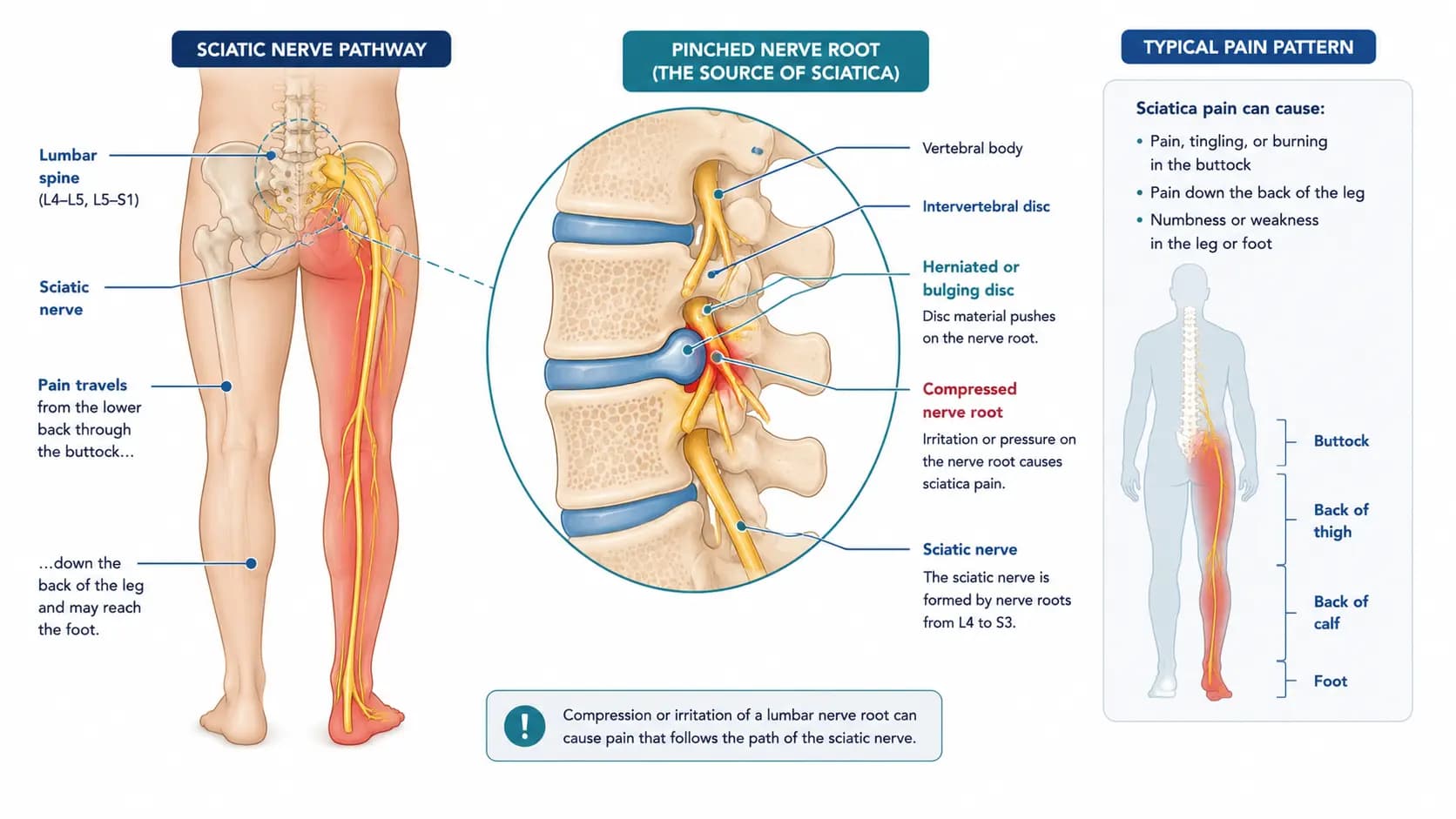
Sciatica is a sharp, electric pain that runs from the lower back into the buttock and leg, caused by irritation of one of the lumbar or sacral nerve roots.
Our evaluation identifies the specific level and structure causing the irritation so treatment is precise rather than generic.
Diagnosis-first care for sciatica and pinched nerve
Physician-led evaluation, image-guided procedures when indicated, and insurance-friendly scheduling across three Houston-area clinics.
Understanding sciatica and pinched nerve
Sciatica is a symptom rather than a diagnosis. It describes pain following the path of the sciatic nerve — usually from the buttock down the back of the thigh and into the calf or foot — and reflects irritation of one of the lumbar or sacral nerve roots that contribute to that nerve.
The most common cause is a disc bulge or herniation pressing on a root, but stenosis, facet hypertrophy, and piriformis-related compression can produce similar patterns. Identifying the specific level and mechanism guides treatment.
Most cases improve without surgery, especially when treatment focuses on reducing inflammation around the irritated root and supporting the natural healing window.
Most sciatica improves with time and conservative care, but specific findings warrant urgent attention.
- Loss of bowel or bladder control
- Saddle area numbness
- Progressive foot drop or leg weakness
- Pain so severe no position provides relief
What patients usually describe
- Sharp, electric pain from the back into the leg
- Numbness or tingling in a specific part of the leg or foot
- Weakness in the foot, ankle, or knee
- Pain worse with sitting, coughing, or sneezing
- Difficulty walking long distances
- Loss of reflex on exam
- Burning or aching in the buttock
What we look for in evaluation
- Lumbar disc herniation
- Foraminal or central stenosis
- Facet joint hypertrophy
- Spondylolisthesis
- Piriformis-related compression in selected cases
- Post-surgical scarring around a root
Diagnosis comes before any procedure.
The exam tests strength, sensation, and reflexes in dermatomal patterns to identify which root is involved. MRI is helpful when symptoms persist or when surgical considerations are on the table. Selective nerve root blocks can confirm the painful level when imaging shows multiple findings.
Dermatomal exam, neurologic testing, review of imaging.
Selective injections to confirm the painful level when needed.
Tiered plan supporting the natural healing window.
Treatments we offer for sciatica and pinched nerve
Each option below is matched to a confirmed pain generator. We start with the least invasive effective approach and only escalate when the diagnosis supports it.
Your first appointment
Expect a thorough exam centered on identifying the involved root and mechanism. Most patients leave with a working diagnosis, a clear plan, and an understanding of how soon improvement is realistic.
What recovery typically looks like
Many patients with sciatica improve over six to twelve weeks. Interventional care can shorten the painful window and support continued activity, which is itself part of recovery.
Conditions patients with sciatica and pinched nerve often ask about
Questions about sciatica and pinched nerve
How long does sciatica usually last?
Many cases improve over six to twelve weeks. Persistent or progressive symptoms benefit from earlier interventional evaluation.
Should I rest or stay active with sciatica?
Most patients do better staying active within tolerance. Prolonged bed rest tends to slow recovery.
Will an injection cure my sciatica?
Injections are not a cure but can substantially reduce pain and inflammation, supporting the natural healing window and improving function.
Ready to find the source of your pain?
Share a few details and our team will reach out to confirm a time that works with your schedule and your insurance.
Request an appointment
Tell us about your sciatica and pinched nerve symptoms and preferred clinic. We will confirm the next available appointment options.